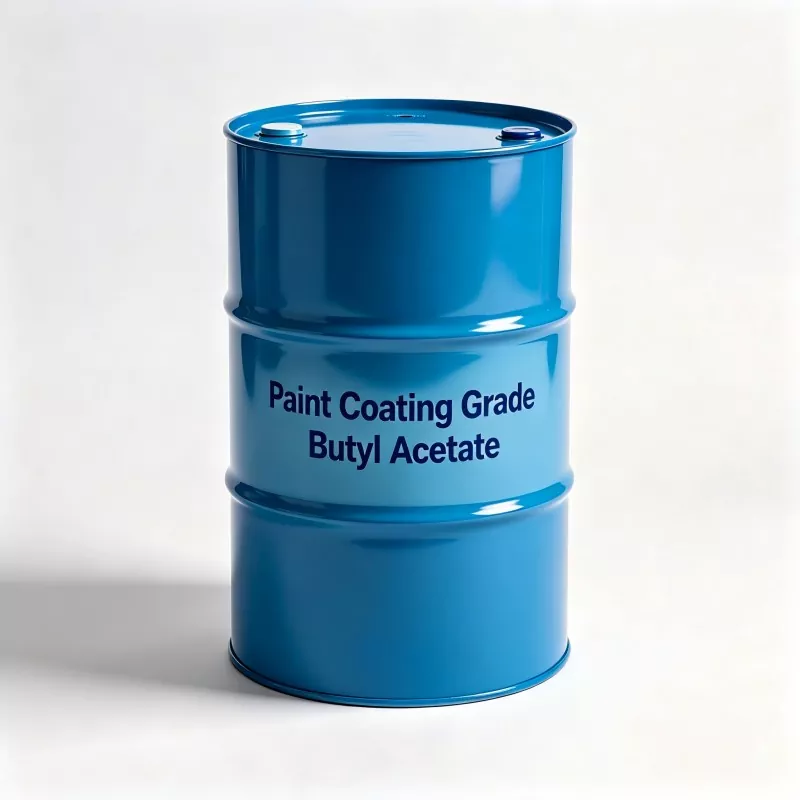
Paint coating grade butyl acetate is an important ester solvent used in many solvent-based paints, industrial coatings, lacquers, and selected polyurethane systems. Its solvency, evaporation behavior, and compatibility with coating resins can influence formulation viscosity, application performance, film leveling, and final surface appearance. This guide explains its chemical characteristics, major applications, quality requirements, purchasing considerations, and safe handling practices to help coating manufacturers select a suitable solvent for their production needs.
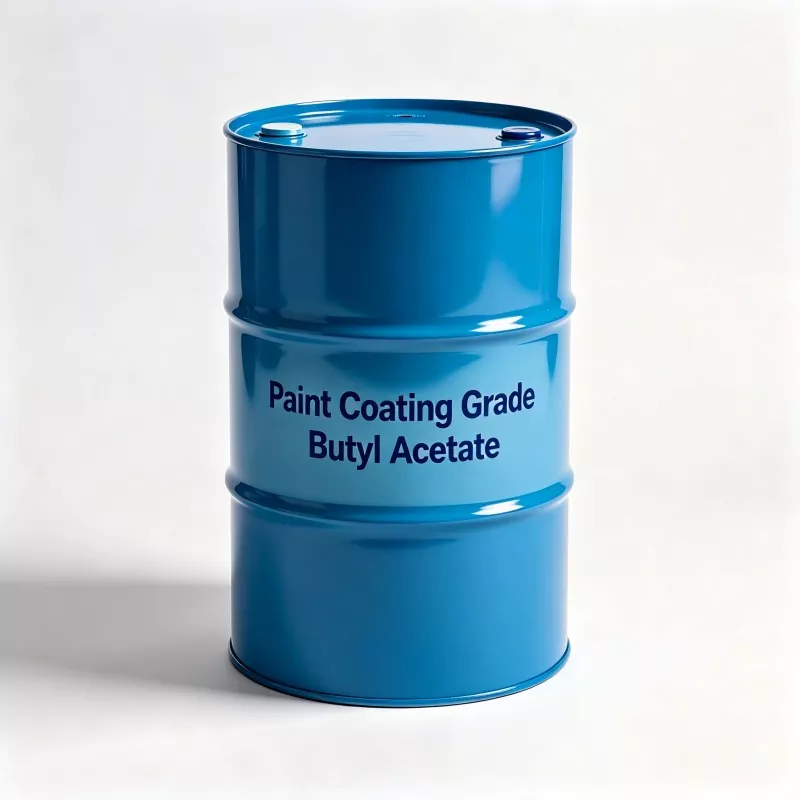
1. What Is Paint Coating Grade Butyl Acetate?
Paint coating grade butyl acetate is a solvent material used in the formulation of paints, lacquers, varnishes, and other solvent-borne coatings. In many industrial applications, the term refers to n-butyl acetate, also known as normal butyl acetate or butyl ethanoate. Its CAS number is 123-86-4.
This colorless organic liquid has a characteristic fruity odor and a medium evaporation profile. It can dissolve or help co-dissolve compatible film-forming resins, making it useful for adjusting coating viscosity and supporting the application and drying process.
For coating manufacturers, selecting the right solvent is about more than achieving a suitable liquid consistency. The solvent must work with the resin system, application equipment, drying conditions, and performance requirements of the finished product.
How Does Butyl Acetate Function in a Coating Formula?
During formulation and application, butyl acetate can perform several functions:
- Solvent action: Helps dissolve compatible resins and maintain a workable coating mixture.
- Viscosity adjustment: Helps bring a formulation within the application range required for spraying or other coating methods.
- Flow and leveling support: Provides time for a wet coating film to spread and even out before drying.
- Evaporation control: Contributes to the overall solvent evaporation profile when combined with other formulation components.
- Application consistency: Supports reproducible coating behavior when solvent quality and formulation conditions remain controlled.
2. Key Properties and Performance Characteristics
Understanding the properties of paint coating grade butyl acetate helps formulators determine whether a particular material is suitable for their application. Commercial specifications may differ by supplier and grade, so technical data should be checked before production use.
| Property | Typical Description | Importance in Coatings |
|---|---|---|
| Chemical name | n-Butyl acetate | Identifies the intended solvent and distinguishes it from other acetate isomers. |
| CAS number | 123-86-4 | Supports product identification and procurement documentation. |
| Appearance | Typically a clear, colorless liquid | Visible changes can indicate contamination or quality deviations. |
| Boiling point | Approximately 126°C at atmospheric pressure | Helps characterize the solvent's volatility and drying behavior. |
| Density | Approximately 0.88 g/cm³ near 20°C | Useful for material handling, volume calculations, and quality checks. |
| Evaporation behavior | Medium or moderate volatility | Influences wet-film flow, solvent release, and drying balance. |
| Solvency | Compatible with various coating resins | Supports resin dissolution and formulation development. |
| Water solubility | Low, but not zero | Water contamination can affect sensitive formulations and process consistency. |
The values above are general reference values, not guaranteed product specifications. Actual results can vary with measurement conditions and material grade. Buyers should use the supplier's current technical data sheet (TDS) and certificate of analysis (COA) for confirmed specifications.
Why Does Evaporation Rate Matter?
A solvent that evaporates too quickly may leave insufficient time for a coating to level, potentially contributing to an uneven surface. A solvent that evaporates too slowly may extend drying time or cause solvent retention under unsuitable conditions.
Butyl acetate can help balance these competing requirements when used in an appropriate formulation. However, evaporation is affected by temperature, airflow, film thickness, solvent blends, and resin chemistry. Laboratory testing is therefore essential before changing the solvent ratio in a commercial formula.
3. Major Applications in Paint and Coatings
Paint coating grade butyl acetate is used in several solvent-borne coating systems because of its useful solvency and evaporation characteristics. The most suitable grade depends on the coating's resin chemistry, end-use requirements, and production process.
3.1 Industrial Protective Coatings
Industrial coatings protect metal components, machinery, equipment, and other substrates against environmental exposure and routine wear. Butyl acetate can be used as a solvent in compatible formulations to adjust application viscosity and support uniform film formation.
For industrial coating producers, solvent consistency is especially important when the product must perform reliably across repeated production batches. Changes in purity, water content, or evaporation behavior can require formulation adjustments and additional process checks.
3.2 Automotive and Transportation Coatings
Automotive coatings and refinish products often require controlled application behavior and an attractive surface finish. In compatible systems, butyl acetate can contribute to the balance between spray viscosity, flow, leveling, and drying.
Its suitability must be evaluated against the specific resin system, application conditions, and required finish. Automotive formulations may also have strict requirements for emissions, appearance, and process consistency.
3.3 Wood Coatings and Lacquers
Wood coatings and lacquers rely on appropriate solvent selection to achieve a consistent appearance across furniture, cabinetry, decorative panels, and other finished wood products.
Butyl acetate can support compatible lacquer and resin systems by helping maintain workable viscosity and allowing the wet film to level. The final result still depends on the coating formulation, wood preparation, application technique, and drying environment.
3.4 Acrylic and Polyurethane Coatings
Various acrylic and polyurethane coating systems use ester solvents as part of a carefully balanced solvent package. Butyl acetate may be suitable for selected acrylic resin systems and two-component polyurethane coatings, provided the resin manufacturer confirms compatibility.
For two-component polyurethane products, formulators should also consider moisture control, curing chemistry, and the requirements of the complete system. A solvent that performs well in one resin formulation should not automatically be assumed suitable for another.
3.5 Printing Inks and Related Formulations
Selected printing inks and related industrial formulations use butyl acetate as a solvent. Its solvency and evaporation profile may help achieve the required balance between application behavior and drying.
Ink manufacturers should assess compatibility with the binder, pigments, printing equipment, substrate, and intended drying conditions before approving a solvent for routine use.
| Application | Potential Role | Key Evaluation Factor |
|---|---|---|
| Industrial coatings | Viscosity adjustment and solvent blending | Batch consistency and application performance |
| Automotive coatings | Support for spray behavior and film leveling | Finish quality and drying balance |
| Wood lacquers | Resin solvency and application control | Surface appearance and drying conditions |
| Polyurethane coatings | Solvent component in compatible systems | Moisture control and resin compatibility |
| Printing inks | Solvent action and evaporation control | Binder compatibility and print quality |
4. Main Benefits for Coating Manufacturers
4.1 Better Control of Formulation Viscosity
Coating viscosity affects pumping, mixing, spraying, and other application operations. In compatible formulations, butyl acetate can help adjust viscosity to a workable range without requiring an immediate change to the resin system.
The target viscosity should be determined through formulation testing and the coating manufacturer's application specifications rather than by using a universal solvent ratio.
4.2 Support for Surface Flow and Leveling
Once a coating is applied, its wet film needs sufficient time to spread and level before it becomes too viscous to move. A suitable solvent balance can help reduce surface irregularities associated with poor leveling.
Orange peel, uneven gloss, and other appearance defects can have multiple causes, including spray settings, substrate preparation, coating viscosity, and environmental conditions. Butyl acetate may help address solvent-related issues, but it cannot correct every application problem.
4.3 Flexible Formulation Development
Butyl acetate can be blended with other compatible solvents to create an evaporation profile suited to a particular coating process. This flexibility allows formulators to evaluate different combinations for production speed, surface appearance, and application requirements.
Any adjustment should be tested for resin compatibility, film properties, drying behavior, and regulatory requirements before being introduced into full-scale production.
4.4 More Consistent Production Results
Using a solvent with controlled quality characteristics helps reduce uncertainty in raw material inputs. When supported by incoming inspection, documented specifications, and appropriate storage, consistent material quality can make production troubleshooting more manageable.
For manufacturers serving multiple markets, reliable documentation also helps procurement and quality teams compare batches and verify that purchased materials meet internal requirements.
5. How to Optimize Solvent Selection
Choosing paint coating grade butyl acetate should begin with the requirements of the complete coating system rather than a single property in isolation.
Step 1: Confirm Resin Compatibility
Identify the resin or binder used in the formulation, such as a compatible acrylic, alkyd, nitrocellulose, polyester, or polyurethane system. Confirm that the selected butyl acetate grade is appropriate for that chemistry.
Step 2: Define Application Requirements
Determine whether the coating will be sprayed, brushed, rolled, or applied through another process. Each method can require different viscosity and flow characteristics. Equipment settings and production conditions should be included in the assessment.
Step 3: Establish the Drying Profile
Consider ambient temperature, humidity, airflow, substrate temperature, and film thickness. Evaluate whether the solvent blend allows sufficient time for leveling while avoiding unacceptable drying delays or solvent retention.
Step 4: Conduct Controlled Laboratory Trials
Change one formulation variable at a time whenever practical. Compare the existing formula with the proposed adjustment under repeatable conditions, then record viscosity, application behavior, drying time, appearance, and any relevant performance results.
Step 5: Validate Production-Scale Performance
After laboratory evaluation, confirm the formulation under representative production conditions. A successful small-scale trial should not be treated as proof that the same result will automatically occur in a larger batch or different climate.
6. Common Formulation Problems and Solutions
Coating defects are often caused by interactions among raw materials, equipment, application conditions, and drying environments. The following troubleshooting guide helps identify when solvent quality or solvent balance deserves further investigation.
| Observed Problem | Possible Contributing Factors | Recommended Checks |
|---|---|---|
| Orange peel or poor leveling | Unsuitable viscosity, rapid surface drying, incorrect spray settings | Review solvent balance, application viscosity, and spray parameters. |
| Longer-than-expected drying time | Slow overall evaporation, excessive film thickness, low airflow | Check the solvent blend, temperature, airflow, and film thickness. |
| Cloudiness or haze | Moisture contamination, resin incompatibility, unsuitable environmental conditions | Check raw material moisture, compatibility, and drying conditions. |
| Viscosity variation between batches | Raw material differences, mixing variation, solvent loss | Compare batch records, incoming COAs, and mixing procedures. |
| Unexpected surface defects | Contamination, substrate issues, application errors, or formulation imbalance | Inspect the full process before attributing the defect to one solvent. |
When a defect appears, avoid making large solvent adjustments before identifying its likely cause. A structured investigation can prevent unnecessary reformulation and help protect finished-product consistency.
7. Quality Standards and Purchasing Considerations
For industrial buyers, selecting a reliable paint coating grade butyl acetate supplier involves more than comparing unit prices. Product specifications, batch consistency, documentation, delivery arrangements, and technical communication all influence the total cost of procurement.
7.1 Review the Certificate of Analysis
A certificate of analysis should provide relevant test results for the supplied batch. Depending on the agreed grade and specification, important parameters may include:
- Purity or assay.
- Water content.
- Acidity.
- Color.
- Distillation range.
- Nonvolatile matter.
- Density or relative density.
- Alcohol content, where applicable.
ASTM D4615 addresses requirements and testing considerations for different grades of n-butyl acetate used in paints and related coatings. Buyers should identify the relevant grade and agreed limits rather than assuming that every commercial product meets the same specification.
7.2 Check Technical and Safety Documentation
Request the current technical data sheet and safety data sheet. These documents help confirm product identity, typical properties, handling precautions, storage requirements, and other information needed for production planning.
Where the material is intended for export, buyers should also confirm applicable chemical inventory, transport, labeling, and import requirements for the destination market.
7.3 Evaluate Batch Consistency
Consistent specifications are especially important for coating producers who depend on repeatable application and appearance. Buyers can establish incoming inspection procedures and compare supplier batch results against agreed acceptance limits.
7.4 Consider the Total Cost of Supply
The lowest quoted price does not always deliver the lowest operating cost. A procurement assessment should consider material quality, delivery reliability, packaging suitability, storage losses, quality documentation, and the potential cost of production interruptions.
For regular purchasing, discuss order volume, packaging format, lead time, shipment arrangements, and batch documentation before finalizing a supply agreement.
- Confirm chemical identity and the required grade.
- Obtain a current TDS, SDS, and representative COA.
- Agree on measurable quality specifications.
- Verify packaging integrity and traceability.
- Review delivery schedules and communication procedures.
- Conduct a compatibility test before approving a new source.
8. Safe Handling, Storage, and Transportation
Butyl acetate is a flammable organic solvent. Its vapor can form ignitable mixtures with air, so appropriate controls are essential during storage, transfer, mixing, and use.
Essential Handling Precautions
- Provide suitable ventilation: Use effective ventilation and appropriate exposure controls to limit vapor accumulation.
- Eliminate ignition sources: Keep the material away from flames, sparks, hot surfaces, and other ignition sources.
- Use suitable protective equipment: Select chemical-resistant gloves, eye protection, and other PPE according to the SDS and workplace risk assessment.
- Control static electricity: Apply appropriate bonding, grounding, and transfer procedures where required.
- Keep containers closed: Minimize evaporation and prevent contamination when the product is not in use.
- Prepare for spills: Follow the site's emergency response procedures and use trained personnel with suitable equipment.
Storage and Transport Requirements
Store the solvent in approved, compatible, tightly closed containers in a designated area designed for flammable liquids. Follow applicable requirements for temperature control, ventilation, segregation, fire protection, and spill containment.
Transport classification, packaging, labeling, and documentation must be confirmed against the applicable regulations and the product's current safety documentation. Personnel should never rely on odor alone to judge whether vapor exposure is safe.
Responsible solvent management also includes preventing releases, minimizing unnecessary solvent loss, and complying with local requirements for volatile organic compound emissions and waste disposal.
9. Frequently Asked Questions
What is paint coating grade butyl acetate mainly used for?
It is mainly used as a solvent in compatible solvent-borne paints, industrial coatings, lacquers, selected polyurethane systems, and printing inks. It can help dissolve compatible resins, adjust viscosity, and balance solvent evaporation during application and drying.
Is paint coating grade butyl acetate the same as n-butyl acetate?
In many commercial contexts, paint coating grade butyl acetate refers to n-butyl acetate, CAS 123-86-4. However, product names alone are not sufficient to confirm chemical identity or grade. Buyers should verify the CAS number, product specification, and technical documentation.
How does butyl acetate affect paint drying time?
Its evaporation characteristics influence the overall drying profile of a coating. The actual effect depends on the other solvents, resin chemistry, film thickness, temperature, humidity, and airflow. Drying performance should be measured under representative application conditions.
Can butyl acetate improve coating surface quality?
In a compatible formulation, it can support flow and leveling by helping the wet film remain workable during application. However, surface quality also depends on viscosity, application equipment, substrate preparation, additives, and drying conditions.
Which quality parameters should buyers check?
Common parameters include purity, water content, acidity, color, distillation range, nonvolatile matter, and density. The exact acceptance limits should match the agreed product grade and the requirements of the intended coating formulation.
Can butyl acetate be used in polyurethane coatings?
It can be used in selected polyurethane formulations, including certain two-component systems, when the coating manufacturer confirms compatibility. Moisture control and curing-system requirements should be considered before use.
How should paint coating grade butyl acetate be stored?
It should be stored in compatible, tightly closed containers in an appropriately designed flammable-liquid storage area. Keep it away from ignition sources, provide suitable ventilation, and follow the supplier's SDS and applicable regulations.
What documents should be requested from a butyl acetate supplier?
Buyers should generally request a current technical data sheet, safety data sheet, and batch-specific certificate of analysis. Depending on the application and destination market, additional compliance or transport documents may be necessary.
How can buyers compare different butyl acetate suppliers?
Compare chemical identity, agreed specifications, batch consistency, documentation, packaging, delivery reliability, technical support, and total procurement cost. A laboratory evaluation using the intended coating formulation is a practical way to assess suitability before routine purchasing.
10. Find a Suitable Butyl Acetate Solution for Your Coating Applications
Choosing the right paint coating grade butyl acetate can help coating manufacturers manage formulation viscosity, solvent balance, application behavior, and production consistency. The best purchasing decision combines a clearly defined product specification with appropriate laboratory validation, reliable documentation, and safe material handling.
Shandong Aolansu Environmental Protection Technology Co., Ltd. is the company to contact for product inquiries and supply discussions related to your industrial chemical requirements. When evaluating butyl acetate for paint and coating applications, communicate your target specifications, intended use, expected order quantity, and destination market so that the product requirements can be assessed accurately.
Looking for Paint Coating Grade Butyl Acetate?
Contact Shandong Aolansu Environmental Protection Technology Co., Ltd. to discuss your product specifications, quality documentation requirements, packaging preferences, and purchasing needs.