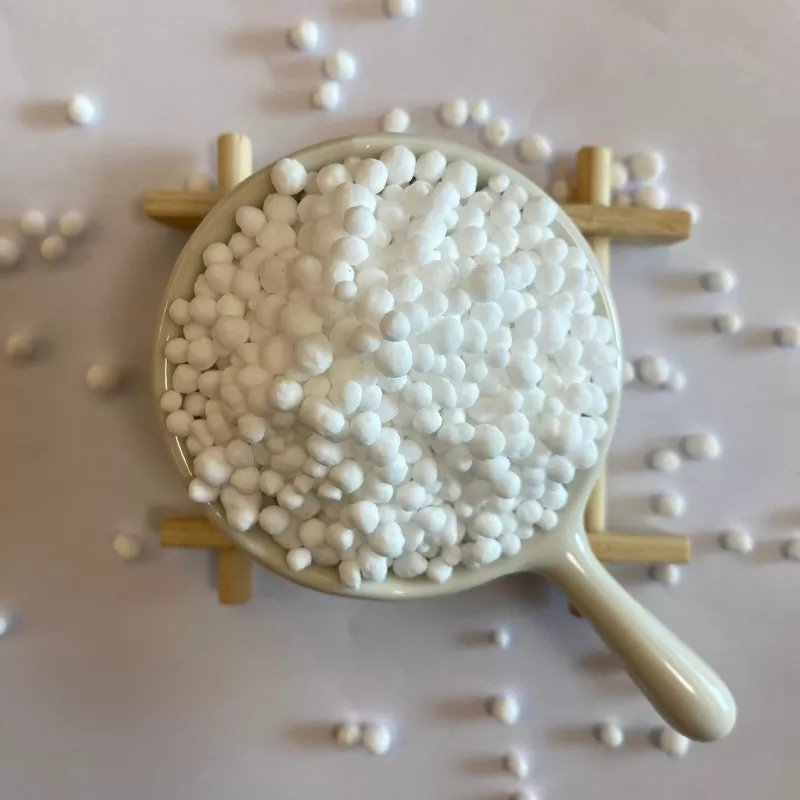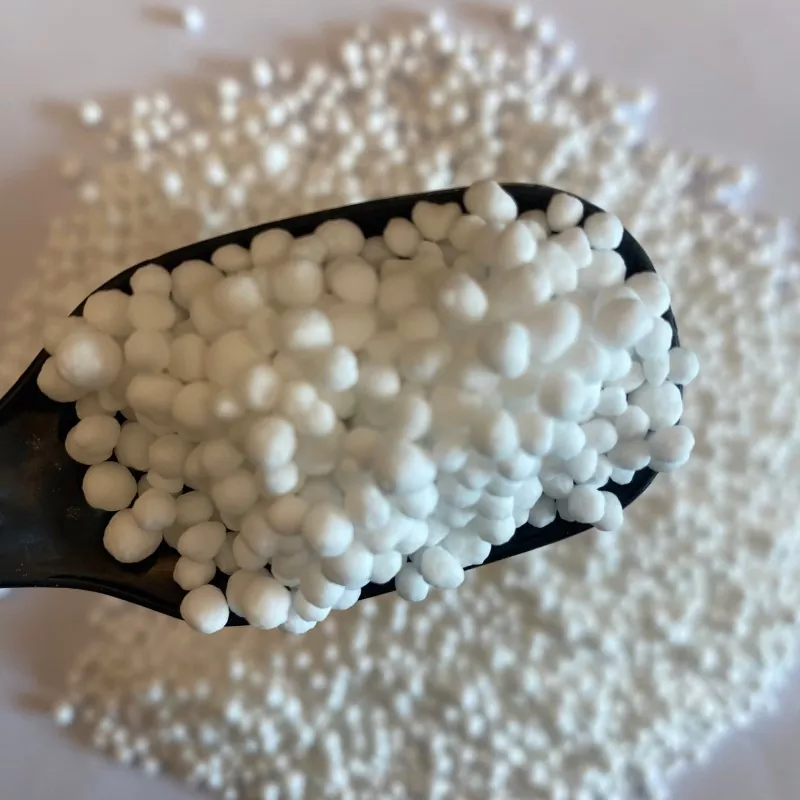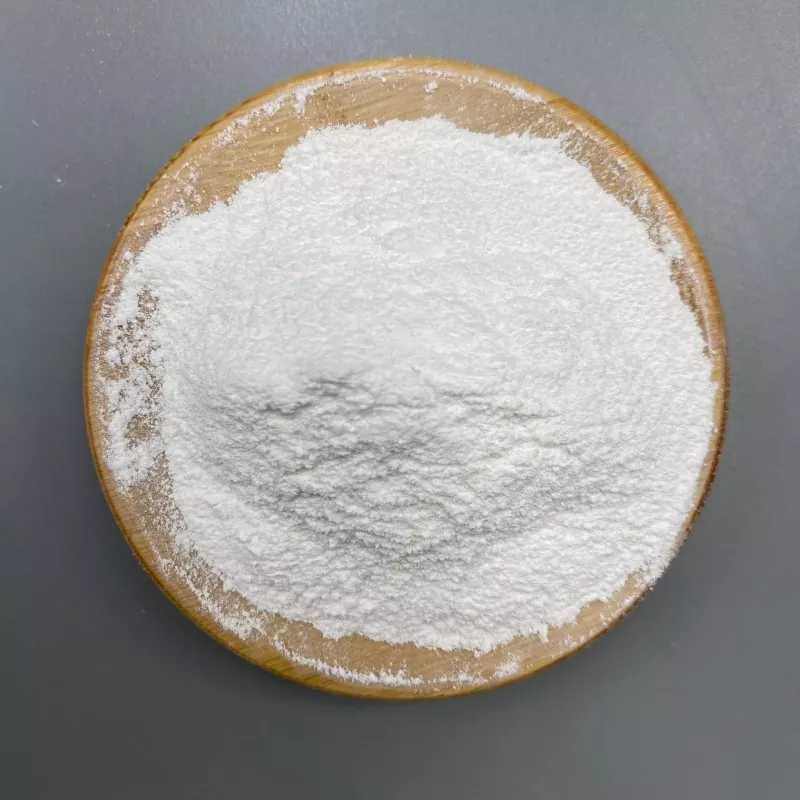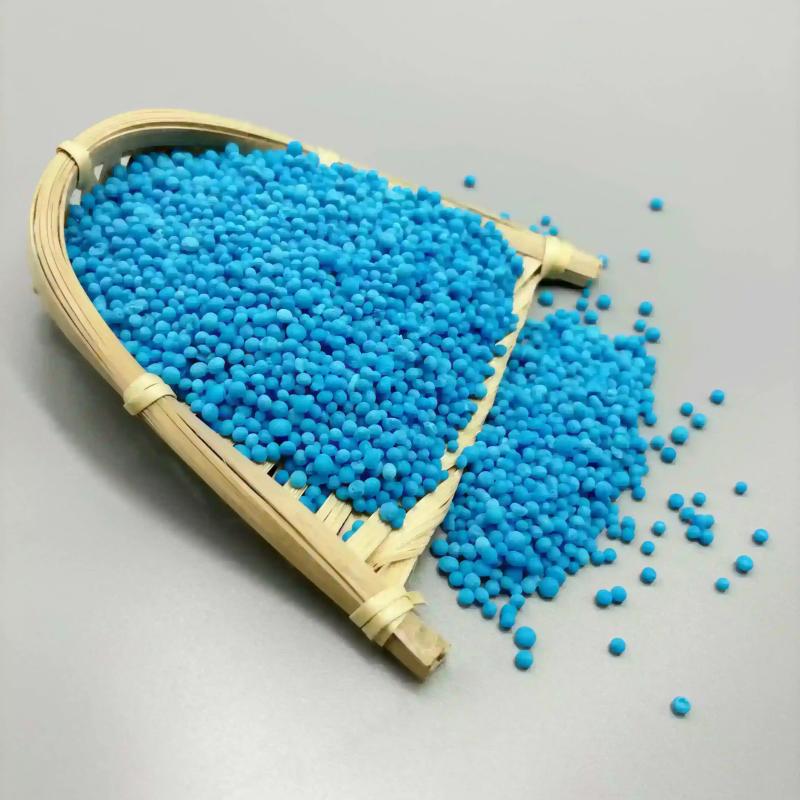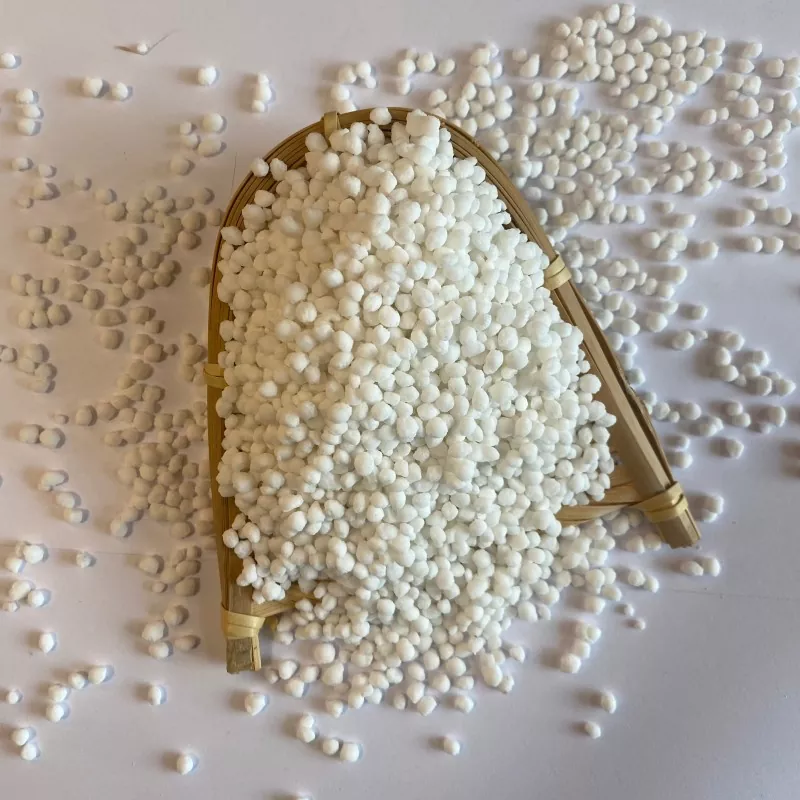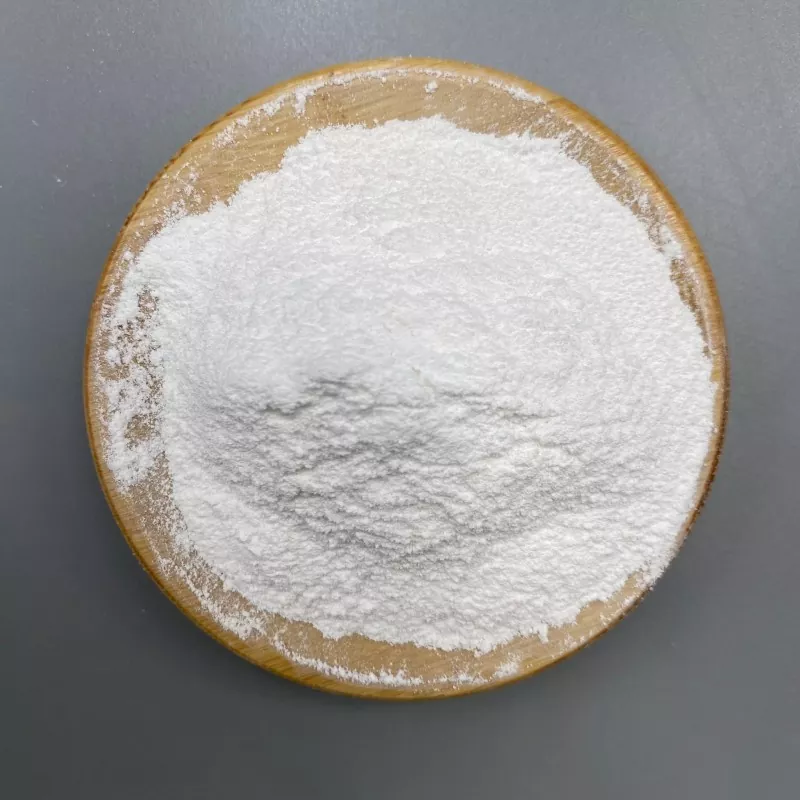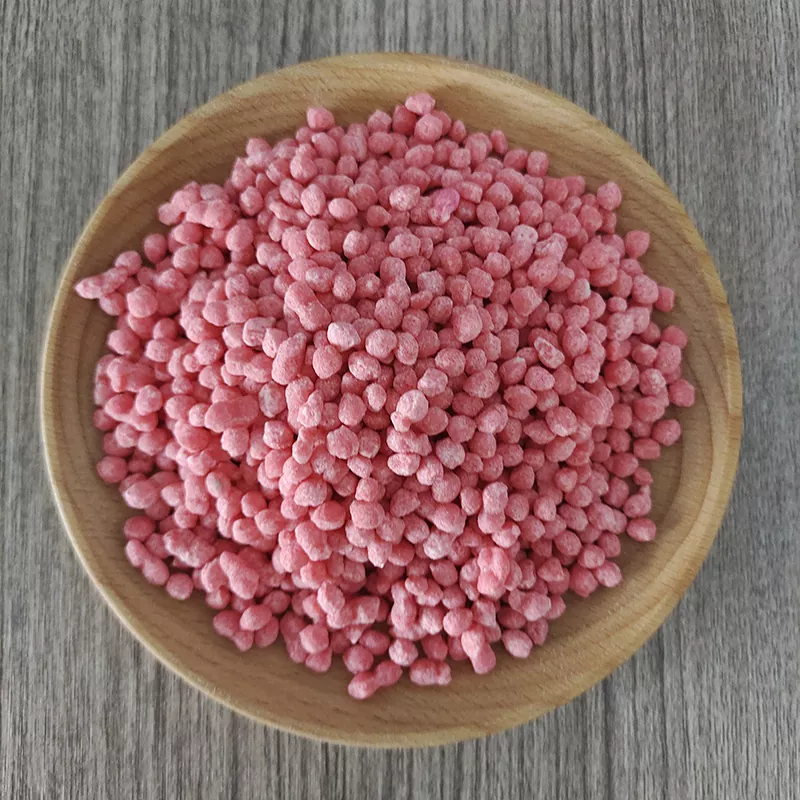
Urea is a solid nitrogen compound widely used in agriculture and selected industrial applications. With nitrogen content of up to 46.67%, it provides a concentrated nitrogen source for direct fertilizer application, fertilizer blending, and other processes requiring a nitrogen-containing raw material. AOLANSU manufactures the product using advanced CO₂ synthesis technology and holds hazardous chemical production certification. The production process is designed to maintain consistent purity and particle characteristics for storage, handling, transportation, and downstream use.
With nitrogen content reaching 46.67%, the product provides a high concentration of nitrogen in solid form. This characteristic is important for fertilizer manufacturers and agricultural distributors because it allows a relatively high nutrient content to be supplied in a manageable quantity.
The material can be used directly in agricultural applications or as a nitrogen component in blended and compound fertilizers. Its high nitrogen concentration also helps simplify formulation calculations when a defined nitrogen percentage is required.
The nitrogen content is one of the main specifications considered during procurement. Buyers can select the appropriate grade according to crop requirements, fertilizer formulation, and local agricultural practices.
For fertilizer manufacturers, stable nitrogen content is particularly important for maintaining the target nutrient ratio between production batches.
Particle characteristics affect storage, feeding, blending, packaging, and field application. The product is manufactured with relatively uniform particles to support consistent material handling during different stages of use.
Moderate hygroscopicity allows the product to be handled and transported under appropriate dry conditions. However, exposure to moisture should still be minimized to reduce the possibility of caking and deterioration of flowability.
Uniform particles can improve material feeding and mixing when the product is processed with mechanical equipment. This is useful for fertilizer plants that combine several granular raw materials into a finished fertilizer product.
Packaging and warehouse conditions should also be considered because moisture protection has a direct effect on the physical condition of the material during long-distance transportation and extended storage.
Urea is widely used as a nitrogen fertilizer for different crops and soil conditions. After application, soil microorganisms and urease-related processes convert it into ammonium nitrogen and other available nitrogen forms, allowing plants to obtain nitrogen during crop growth.
Its application can support nitrogen supplementation during different crop growth stages. Actual application rates and timing should be determined according to crop type, soil conditions, local agricultural practices, and fertilizer management plans.
It can be used as a nitrogen component in compound and blended fertilizers. Its high nitrogen content makes it suitable for formulations where nitrogen represents a significant portion of the finished fertilizer.
During blending, particle size compatibility with other raw materials should be considered to reduce segregation and maintain a more consistent nutrient distribution.
In addition to agricultural use, Urea is used as a nitrogen-containing raw material in selected industrial processes. Industrial buyers may have different requirements for purity, particle characteristics, packaging, and delivery conditions depending on the specific application.
It is also used in certain environmental protection processes, including applications where urea-based solutions serve as a source of ammonia for compatible emissions-control systems.
In suitable emissions-control systems, urea can be processed into a solution and used as a reducing-agent source. The actual grade and solution requirements depend on the equipment, process design, and applicable technical standards.
Industrial users should confirm the required specification before procurement because agricultural and industrial applications may have different quality requirements.
For bulk procurement, consistent product specifications are important for both fertilizer production and industrial processing. Key purchasing considerations include nitrogen content, purity, particle condition, moisture protection, packaging, and batch consistency.
AOLANSU uses CO₂ synthesis technology during production and applies controlled manufacturing procedures to maintain the expected physical and chemical characteristics of the finished product.
AOLANSU holds hazardous chemical production certification, supporting compliant production and supply management for applicable chemical products.
For international orders, buyers should also confirm the documentation, packaging, transportation requirements, and import regulations applicable to the destination country before shipment.
The material should be stored in a dry and well-ventilated warehouse and protected from rain, water, and excessive moisture. Packaging should remain properly sealed during storage and handling.
During transportation, protection against moisture and physical damage is important. For international procurement, packaging format and shipping arrangements should be selected according to order quantity, transportation distance, storage conditions, and destination requirements.
The appropriate packaging format depends on the purchasing quantity and logistics method. Buyers should confirm package size, loading requirements, labeling, and documentation before shipment.
For long-distance transportation or extended storage, moisture protection should receive particular attention because absorbed moisture can affect particle condition and flowability.
When purchasing urea in bulk, buyers should evaluate more than nitrogen content. Product specification, particle characteristics, packaging, batch consistency, order quantity, delivery schedule, and destination regulations can all affect the actual procurement result.
For recurring orders, buyers may also establish consistent specifications with the supplier to reduce variations between batches and simplify incoming quality inspection.
A fertilizer distributor purchasing nitrogen fertilizer for multiple agricultural markets may need a material that can be used across different crops without maintaining separate nitrogen raw materials for each application. By selecting a high-nitrogen solid fertilizer with consistent particle characteristics, the distributor can simplify warehouse management and use the same material for direct agricultural sales and fertilizer blending.
In this scenario, the 46.67% nitrogen content provides a concentrated nutrient source, while uniform particles facilitate storage, handling, blending, and mechanical application. The distributor can therefore evaluate the product not only by nitrogen percentage, but also by physical consistency, packaging, logistics, and supply stability.
The nitrogen content can reach up to 46.67%, providing a concentrated nitrogen source for agricultural fertilizer applications.
Yes. It can be used as a nitrogen component in blended and compound fertilizers, subject to the formulation requirements.
It should be kept in a dry, well-ventilated environment and protected from moisture to help maintain particle quality and flowability.
Yes. Besides agriculture, it is used in selected industrial and environmental protection applications according to the required grade and process.
Buyers should confirm nitrogen content, purity, particle characteristics, packaging, quantity, transportation requirements, documentation, and destination-market regulations before ordering.